About Us
The Laboratory of Building Diagnostics gathers essential data to identify the causes of failures affecting building heritage through the use of compatible investigative techniques. It also focuses on assessing the risks induced by climate change in the built environment and on experimentally evaluating resilience factors in the context of climate scenarios. Our diagnostic work is based on a comprehensive methodology that combines qualitative and quantitative approaches. The qualitative approach primarily involves direct observation of structural damage and material degradation, as well as historical and archaeological research. The quantitative approach relies mainly on material and structural testing, monitoring, and structural analysis.
The laboratory’s research and consulting activities are concentrated in three thematic areas:
- A – Innovative testing techniques (laboratory and in-situ)
- B – Tools for documentation and damage assessment
- C – Monitoring systems
Equipment
Moisture Monitoring System (MMS)
This system measures changes in electrical resistance caused by the presence of water. It consists of an electronic board and graphite sensors inserted directly into the building structure. The system is primarily intended for laboratory evaluation of rainwater penetration into masonry structures. It successfully monitors moisture changes and accurately detects accumulation and transport mechanisms. Compared to similar systems, MMS is cost-effective, easy to manufacture and install, and allows for non-destructive, repeatable measurements with sufficient spatial and temporal resolution, identifying transient states at different depths of building elements. Further development is ongoing.
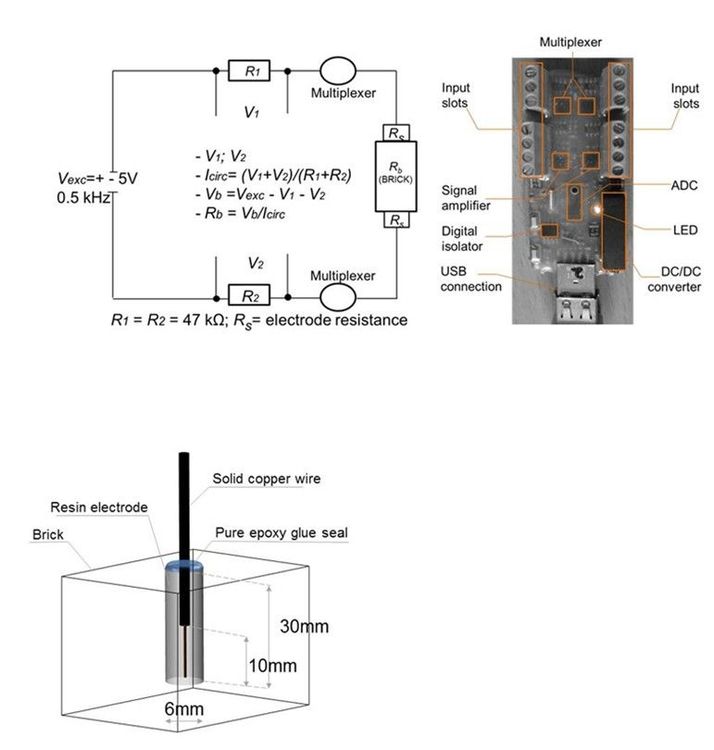
Moisture Monitoring System (MMS)
Small Wind Tunnel (LSWT)
This innovative device enables a comprehensive evaluation of the response of building materials to realistic climate scenarios. It allows control of multiple environmental parameters—airflow speed, relative humidity, and temperature—while simultaneously monitoring the response of material samples in the test section. The overall dimensions of the LSWT (200 × 173 × 43.5 cm) are optimised in terms of construction and operating costs. They allow for a vertical circuit orientation (reducing space requirements) and facilitate transport within the laboratory. The test section, with a square cross-section of 30 × 30 cm and a length of 90 cm, permits simultaneous testing of multiple samples. The main advantages of the LSWT are its low cost relative to its capabilities and its adaptability for a variety of studies. Experimental results show that airflow velocity in the test section ranges from 0.2 to 0.7 m/s, with consistent velocity profiles across the fan power range, confirming flow homogeneity. The safe operating range is 10–35 °C with relative humidity from 30% to 99%.
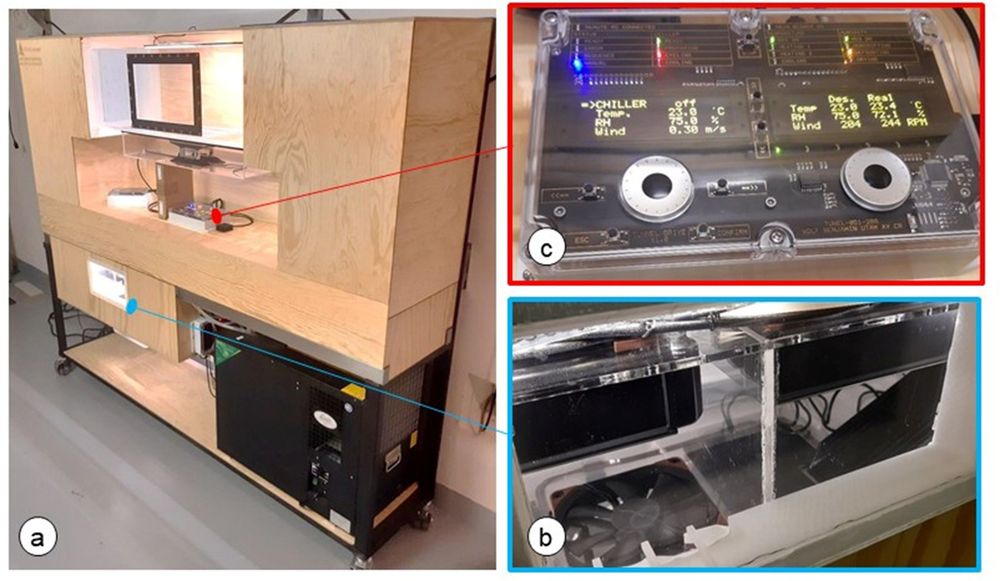
Small Wind Tunnel (LSWT)
MONDIS (Monument Damage Information System)
MONDIS is a knowledge-based system developed jointly by the Department of Cybernetics at the Faculty of Electrical Engineering, Czech Technical University in Prague, and the Institute of Theoretical and Applied Mechanics of the Czech Academy of Sciences. It is built on the Monument Damage Ontology, which models the basic relationships between factors affecting the description, diagnosis, and intervention of damage to building heritage in a machine-readable format. Unlike conventional databases, MONDIS enables automatic inference, which improves user interaction and information retrieval. The system digitises a wide range of data, including expert reports, books, articles, and scientific papers. Its content and inference schemes can be continuously expanded and updated in line with the knowledge contributed by users. MONDIS offers applications for two core activities: data entry and search
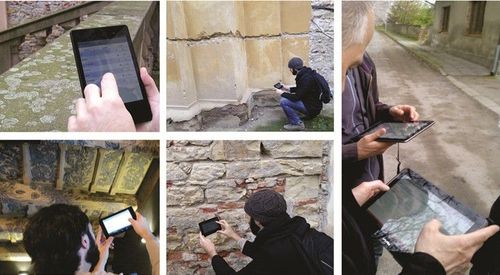
MONDIS (Monument Damage Information System)